
Why Does Paint Peel, Bubble and Crack? Common Causes and How to Prevent Paint Failure
A fresh coat of paint can transform the appearance of a building, but when paint starts peeling, bubbling, blistering or cracking, it is usually more than just a cosmetic problem.
Paint failure generally occurs when the coating loses its adhesion to the surface beneath it, or when the paint film can no longer withstand the conditions around it. Moisture, poor surface preparation, incompatible products, environmental exposure and movement in the substrate can all contribute to premature paint failure.
Understanding why paint peels, bubbles and cracks is the first step towards fixing the problem properly — rather than simply painting over it and watching it return.
At Nsimeko Projects, we approach painting as more than applying a new coat. Proper preparation, identifying underlying problems and selecting the appropriate coating system are essential to achieving a durable, professional finish.

What Causes Paint to Peel, Bubble and Crack?
There are several reasons paint can fail, but most problems fall into three main categories:
Moisture
Poor preparation and application
Other environmental, material and substrate factors
Let's take a closer look at each one.
A. Moisture:
One of the Most Common Causes of Paint Failure Moisture is one of the biggest causes of peeling and blistering paint, particularly on exterior walls, ceilings and areas affected by water ingress.
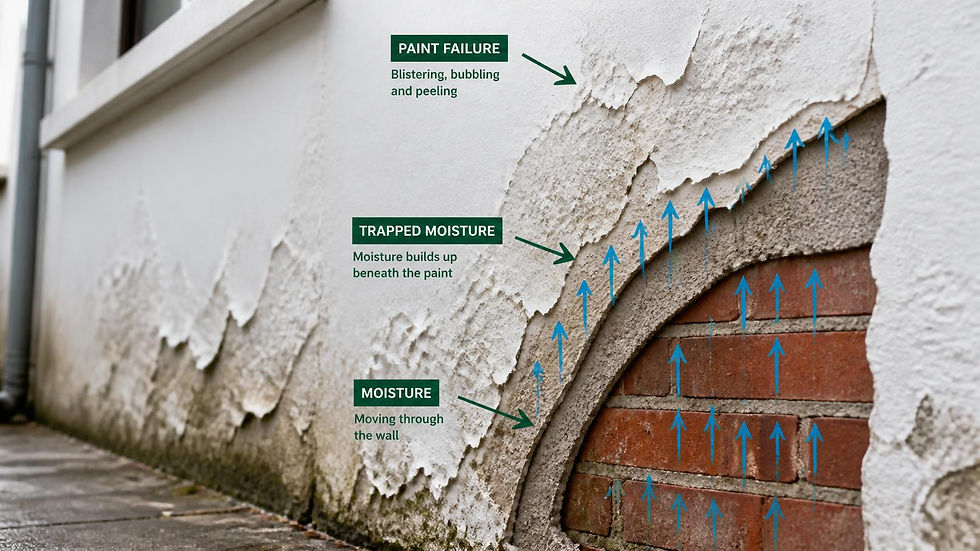
If moisture gets behind a paint film, it can interfere with the coating's adhesion and create pressure beneath the surface. Eventually, the paint may lift, blister, bubble or peel away.
Trapped Moisture
Painting over a damp surface can trap moisture beneath the coating. As that moisture attempts to escape, it can push against the paint film and cause blistering or loss of adhesion.
Moisture can come from several sources, including:
Roof or waterproofing failures
Leaking pipes Poor drainage
Water penetration through exterior walls
Damp masonry
Condensation Inadequate ventilation
Simply repainting a damp wall does not address the underlying problem. The source of the moisture should be identified and resolved before the affected area is properly prepared and repainted.
Vapour Pressure
Water vapour can also move through porous building materials. When moisture or vapour becomes trapped beneath a coating, pressure can develop at the paint-substrate interface.
This is particularly important when painting masonry, concrete and other porous surfaces. Coating systems need to be appropriate for the substrate and the conditions in which they will be used.
Salt and Alkalinity
Masonry, concrete and cement-based surfaces can contain soluble salts and are naturally alkaline. When moisture moves through these materials, salts can migrate towards the surface and form a powdery deposit known as efflorescence.
High alkalinity and moisture can contribute to deterioration, blistering and peeling of coatings. New concrete should also be allowed to cure appropriately before coating, in accordance with the coating manufacturer's requirements.
If you notice white, powdery deposits appearing underneath or around areas of failing paint, the problem may not simply be the paint itself. It can indicate moisture movement through the underlying masonry.

B. Poor Preparation and Application
Even high-quality paint can fail if the surface underneath it has not been properly prepared. A durable paint finish starts long before the first coat is applied.
Dirty Walls
Dust, dirt, grease, oil, chalking, loose paint and other contaminants can prevent the new coating from properly bonding to the surface.
Painting over a contaminated surface can therefore result in poor adhesion, peeling and other coating defects. Proper preparation may involve cleaning, removing loose material, sanding, repairing defects and allowing the surface to dry before coating.
No Primer
Primer is not simply an optional extra.
Depending on the substrate and coating system, primer can help create a uniform surface and improve adhesion. It can also seal porous surfaces and provide other functions required by the particular coating system.
Skipping the appropriate primer can therefore contribute to premature coating failure, particularly when dealing with porous, bare, repaired or otherwise difficult surfaces.
Thick Layers
More paint does not necessarily mean better protection.
Applying paint too heavily or outside the manufacturer's recommended spreading rate can contribute to problems within the coating film. Excessive film thickness can also interfere with proper drying and curing.
The correct application method, coating thickness, drying time and environmental conditions all matter when applying a professional coating system.
C. Other Causes of Peeling, Bubbling and Cracking
Using the Wrong Paint
Not every paint is suitable for every surface or environment. Exterior walls, concrete, masonry, metal and interior surfaces can have very different requirements.
The coating needs to be compatible with the substrate and appropriate for the conditions it will be exposed to. Using an unsuitable coating can result in poor adhesion, premature deterioration, cracking or peeling.
Paint Age
Paint doesn't last forever. Over time, coatings can harden, become brittle and lose some of their ability to accommodate normal changes in temperature and humidity.
Older coatings can therefore become increasingly susceptible to cracking, flaking and peeling. If multiple layers of old paint are already failing, simply adding another coat over them is unlikely to provide a long-term solution.
Extreme Weather and Environmental Stress
Exterior paint is exposed to the elements every day. Sunlight, heat, rain, humidity and temperature fluctuations can place continual stress on a coating.
Painting in unsuitable environmental conditions can also affect how a coating dries and cures.
For example, excessive heat can contribute to blistering, while moisture or rain shortly after application can affect the coating before it has properly dried.
This is why professional painting requires consideration of both the coating system and the conditions during application.
Excessive Movement of the Substrate
Buildings and building materials aren't completely static.
Temperature changes, structural movement and movement within certain substrates can place stress on the paint film. If the coating cannot accommodate that movement, cracking may develop.
It's also important to distinguish between cracks in the paint film and cracks originating in the underlying substrate. If the substrate itself is moving or cracking, repainting the surface won't necessarily solve the underlying issue.

Substrate Movement
Should You Just Paint Over Peeling or Cracked Paint?
Short answer? No.
Painting over loose, peeling or poorly adhered paint can simply hide the problem temporarily. If the underlying cause isn't addressed, the new coating may fail along with the old one.
A proper remedial painting process should begin by assessing the condition of the existing coating and substrate.
Depending on the situation, this may include:
Identifying the cause of the paint failure
Addressing moisture or water ingress where applicable
Removing loose or failing paint
Cleaning and preparing the surface
Repairing cracks, holes or damaged areas
Applying the appropriate primer or sealer where required
Selecting a suitable coating system
Applying the coating according to the manufacturer's requirements
This preparation is what helps turn a quick cosmetic repair into a more durable solution.
How Nsimeko Projects Can Help
At Nsimeko Projects, we understand that a successful painting project starts with the condition of the surface beneath the paint.
Our team provides professional painting and building maintenance solutions for residential, commercial and industrial environments. Where paint failure is linked to moisture, cracks, waterproofing or other building defects, we can assess the broader problem and recommend the appropriate remedial work.
Our services include general painting, waterproofing, crack and joint repairs, roofing and building maintenance, helping address the causes of deterioration as well as the visible finish.
Whether you're dealing with peeling exterior paint, bubbling walls, cracked coatings or a building that needs a complete refresh, proper diagnosis and preparation can make all the difference.
Don't Just Paint Over the Problem
Peeling, bubbling and cracking paint can be a sign that something underneath the coating needs attention.
If your building's paintwork is deteriorating, Nsimeko Projects can help identify the problem, prepare the surface correctly and deliver a professional coating solution designed for the building and its environment.
Contact Nsimeko Projects to discuss your painting, waterproofing and building maintenance requirements.


Comments