
The Most Common Causes of Roof Leaks and How to Prevent Them

A leaking roof is more than just an inconvenience. For commercial and industrial buildings, roof leaks can lead to costly repairs, damaged equipment, disrupted operations, and long-term structural problems if they are not addressed quickly.
While some leaks are caused by severe weather events, many roof leaks develop gradually due to poor maintenance, ageing materials, drainage issues, or small areas of damage that have been overlooked. Understanding the most common causes of roof leaks allows property owners and facility managers to identify potential problems early and take preventative action before minor issues become major repairs.
While the causes listed below are some of the most common reasons roof leaks occur, every building and roofing system is different. The exact cause of a leak is not always visible from the surface and may require a professional assessment to identify the source of the problem. For an accurate evaluation of your roof's condition, it is recommended to arrange a professional roof inspection.
Our experienced team at Nsimeko Projects can assess your roofing system, identify potential problem areas, and recommend the most suitable maintenance or repair solutions to protect your building
1. Dirt and Debris Build-Up
One of the simplest but most overlooked causes of roof leaks is the accumulation of dirt, leaves, branches, and other debris. Over time, debris can collect on roof surfaces, around drainage points, gutters, valleys, and roof outlets. When water cannot flow freely away from the roof, it creates areas where moisture can collect and eventually penetrate the roofing system.
Dirt and debris can also:
Block drainage systems
Trap moisture against roofing materials
Encourage moss and plant growth
Accelerate deterioration of waterproofing systems
Cause corrosion on metal roofing
Regular roof cleaning and inspections help prevent debris build-up and ensure water can drain away effectively.

2. Blocked or Damaged Gutters
Gutters play an essential role in directing rainwater away from your building. When gutters become blocked, damaged, or poorly maintained, water can overflow and find its way into areas it should not reach.
Common gutter-related causes of roof leaks include:
Leaves and debris blocking water flow
Cracked or damaged gutters
Loose gutter connections
Incorrect gutter installation
Blocked downpipes
Overflowing gutters can result in water damage to roofs, walls, ceilings, and building structures. Routine gutter cleaning and maintenance are important parts of a preventative roof maintenance programme.

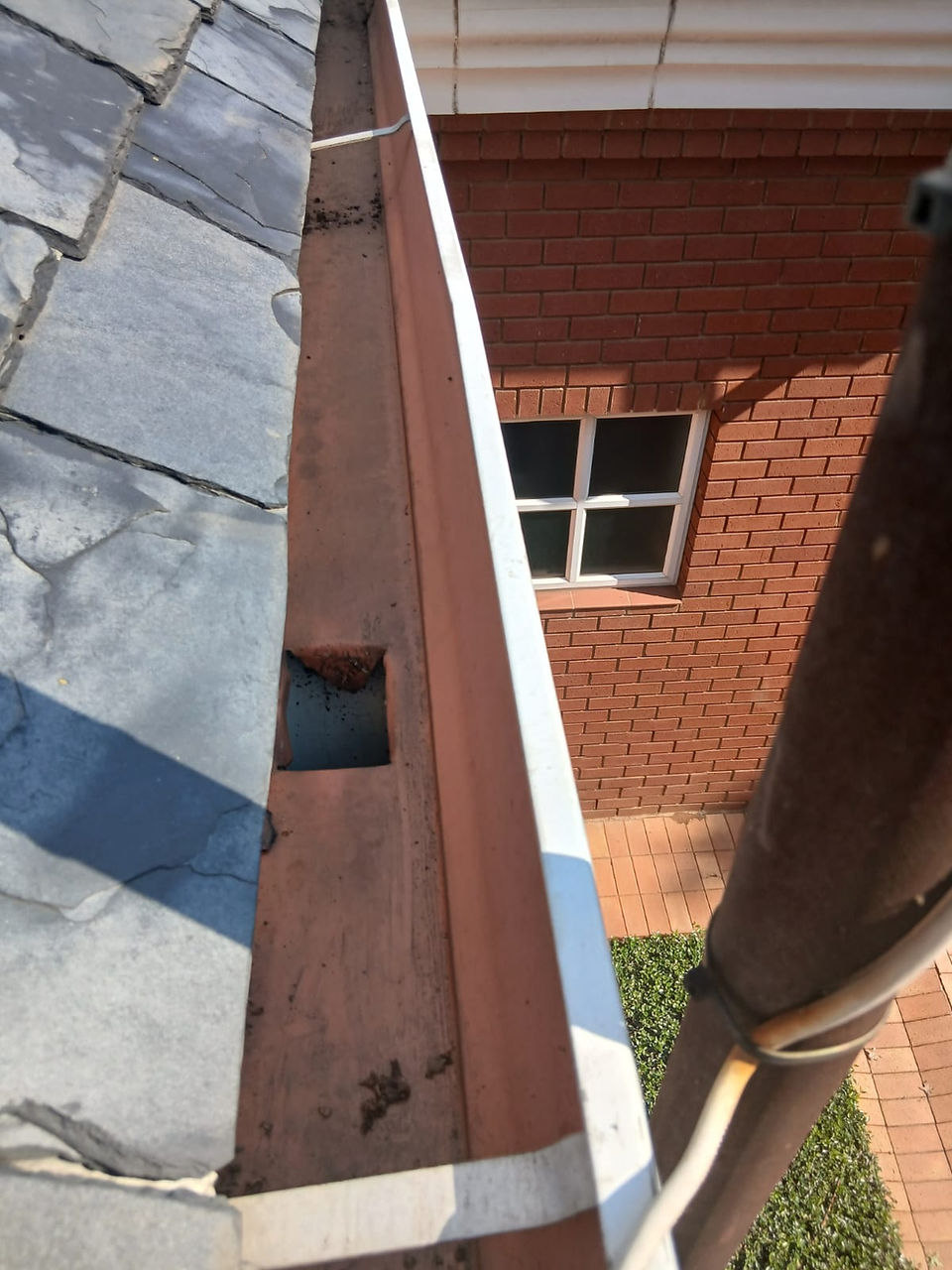
Before & After Gutter Cleaning by Nsimeko Projects.
3. Ageing Roofing Materials
No roof lasts forever. Over time, exposure to the elements naturally causes roofing materials to weaken and deteriorate. As a roof ages, materials may become less effective at preventing water penetration. Waterproofing systems can deteriorate, metal roofing can develop corrosion, sealants can break down, and tiles can become brittle.
Signs of an ageing roof may include:
Cracked or damaged surfaces
Rust and corrosion
Deteriorated waterproofing
Loose roofing materials
Frequent repairs or recurring leaks Regular roof inspections help determine whether repairs can extend the life of an existing roof or whether replacement may eventually be required.
4. Damaged Roof Ridges, Valleys and Flashings
Roof ridges, valleys, and flashings are critical areas where different sections of a roof meet. Because these areas are exposed to water flow and movement, they are common points where leaks can develop.
Roof Ridges
The ridge is the highest point of a pitched roof where two roof slopes meet. Damaged ridge caps, loose materials, or deteriorated sealants can allow water to enter.
Roof Valleys
Valleys are channels where two roof sections meet and where rainwater naturally flows. If valleys become blocked, damaged, or incorrectly sealed, water can overflow and penetrate the roof structure.
Flashings
Flashings are protective materials installed around areas such as:
Roof edges
Chimneys
Vents
Skylights
Wall intersections
Damaged or poorly maintained flashing is one of the most common causes of roof leaks because it creates gaps where water can enter.
Regular inspections of ridges, valleys, and flashings are essential for preventing water ingress.


Roof Ridges Waterproofed by Nsimeko Projects.
5. Uneven Concrete Roof Surfaces
Concrete roofs are commonly found on commercial buildings, apartment blocks, shopping centres, and industrial properties. Although durable, they require proper maintenance to remain waterproof.
An uneven concrete roof surface can create low areas where water collects instead of draining away. Over time, standing water can place additional stress on waterproofing systems and increase the risk of leaks.
Common causes include:
Natural movement of the structure
Poor drainage design
Cracks caused by expansion and contraction
Deteriorating waterproofing
Regular inspections, concrete repairs, and waterproofing maintenance help prevent moisture from penetrating the structure.

Nsimeko Projects Roof Waterproofing 
Nsimeko Projects Roof Waterproofing
Before & After. Deteriorated Waterproofing Removed & Re-Waterproofed by Nsimeko Projects
6. Missing or Damaged Roof Tiles
For buildings with tiled roofs, damaged or missing tiles are a common cause of leaks.
Roof tiles can become damaged due to:
Severe weather conditions
Impact damage
Ageing Incorrect installation
Even one damaged tile can allow water to enter the roof system, potentially causing damage to insulation, ceilings, and internal structures.
Regular roof inspections help identify damaged tiles before they lead to more serious problems


Roof Tiles Removed & Reinstated by Nsimeko Projects.
7. Improper Drainage on Flat Roofing Systems
Flat roofs are widely used on commercial and industrial buildings, but they rely heavily on effective drainage systems to prevent water accumulation.
Although called "flat roofs", these systems are designed with a slight slope to allow water to move towards drainage outlets. When drainage is inadequate, water can pool on the roof surface and increase the risk of leaks.
Common drainage problems include:
Blocked outlets
Poor roof slope
Damaged waterproofing systems
Incorrectly positioned drainage points
Lack of regular maintenance
Standing water can accelerate waterproofing failure and cause leaks that may eventually affect the interior of the building.


Flat Roof Cracks Repaired & Waterproofed by Nsimeko Projects.
8. Weather and Natural Causes
Weather conditions are one of the most unavoidable causes of roof damage. South African buildings are exposed to intense sunlight, heavy rainfall, strong winds, hail, and sudden temperature changes throughout the year.
Weather-related roof damage can include:
Hail damage
Wind-lifted roofing materials
Cracked waterproofing caused by temperature changes
Water penetration after heavy rainfall
UV damage to roofing materials
While weather cannot be controlled, regular roof inspections after severe weather events can help identify damage before it becomes a larger problem.
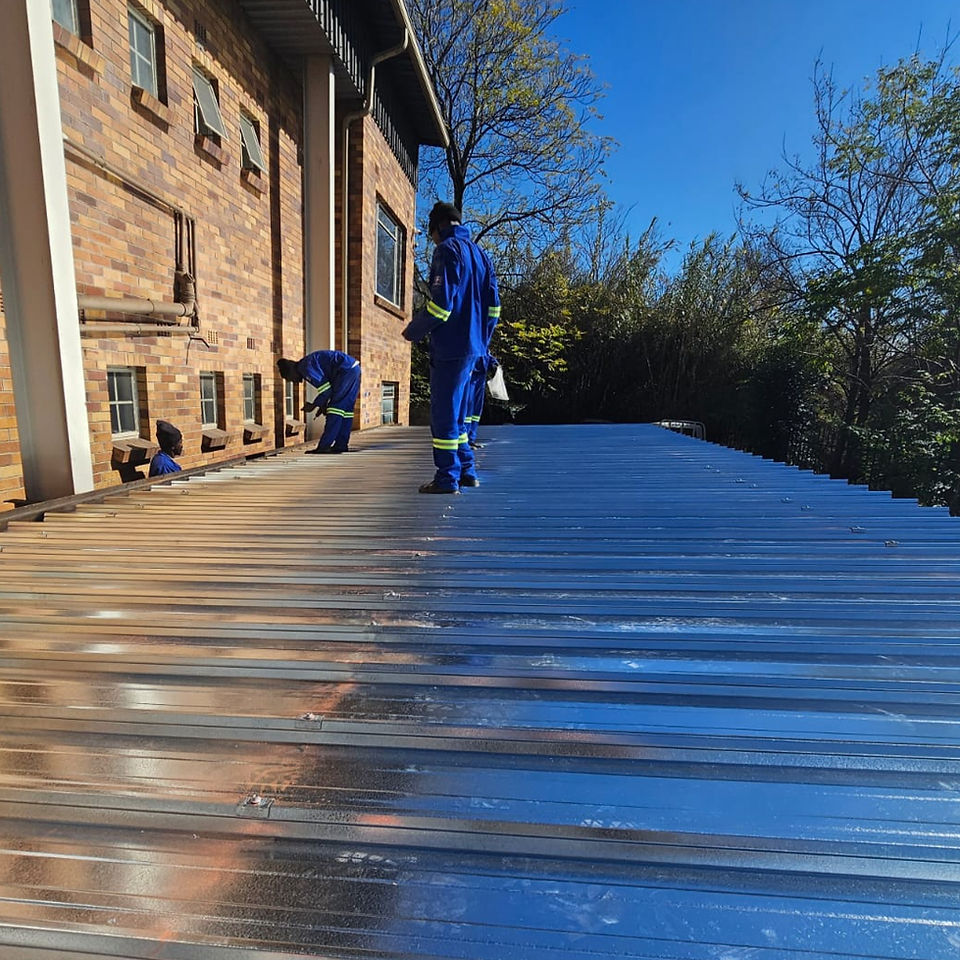

Resheeting Done by Nsimeko Projects.
How to Prevent Roof Leaks
The best way to prevent roof leaks is through regular inspections and preventative maintenance. A professional roof maintenance programme should include: Routine roof inspections Gutter cleaning and maintenance Waterproofing assessments Checking roof flashings and seals Repairing cracks and damaged areas Clearing drainage systems Inspecting after severe weather Addressing minor issues before they worsen Preventative maintenance is far more cost-effective than dealing with emergency roof repairs and extensive water damage.

Protect Your Building with Professional Roof Maintenance
Roof leaks rarely happen overnight. In most cases, they develop from small issues that have been overlooked or left unattended over time. While the causes discussed in this article are some of the most common contributors to roof leaks, the source of a leak can vary depending on the building, roof type, materials used, and overall condition of the roofing system.
If you notice signs of water damage, recurring leaks, or simply want to ensure your roof is performing as it should, a professional roof inspection is the best place to start. At Nsimeko Projects, we provide professional roof inspections, waterproofing solutions, roof repairs, gutter maintenance, concrete repairs, and specialised commercial and industrial building maintenance services.
Our team can help identify potential issues early and provide practical solutions to keep your building protected. A proactive approach to roof maintenance helps prevent costly repairs, extends the lifespan of your roof, and ensures your building remains protected through every season and every weather condition.


Comments